R&D in Motion Capture: Why Camera Accuracy Matters Before the Shoot Begins
In a motion capture project, most problems do not begin during the shoot. They begin much earlier, when the camera data seen during previsualization does not perfectly match the final tracked camera in post-production.
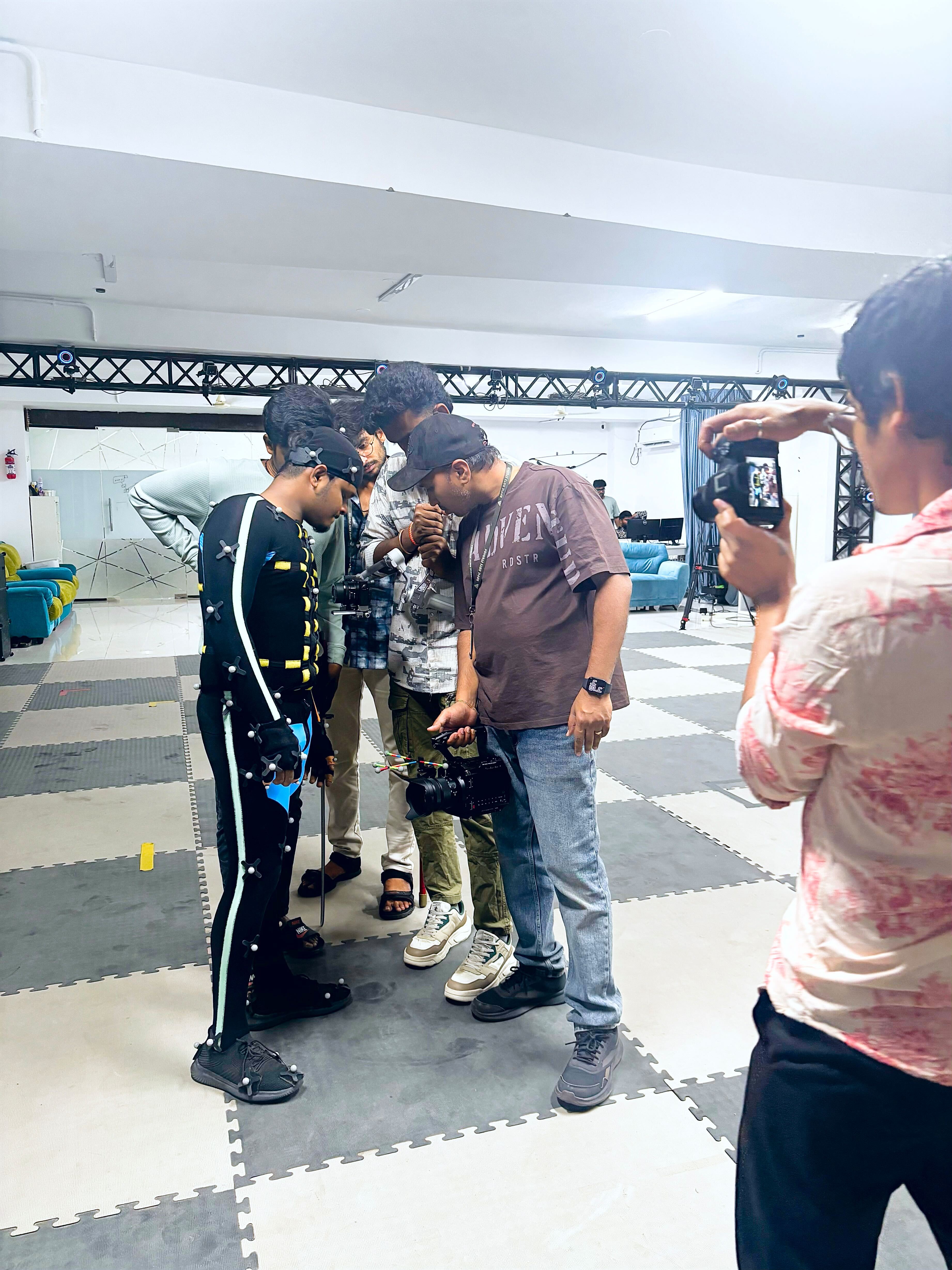
At Apple Arts Studios, we believe that the success of a motion capture project depends on preparation. Every workflow is tested before production starts so that technical issues are solved in advance, not discovered during the shoot.
With more than 14 years of experience in motion capture, our team uses internal R&D sessions to test camera systems, tracking stability, and data accuracy before they are used in a real production environment.
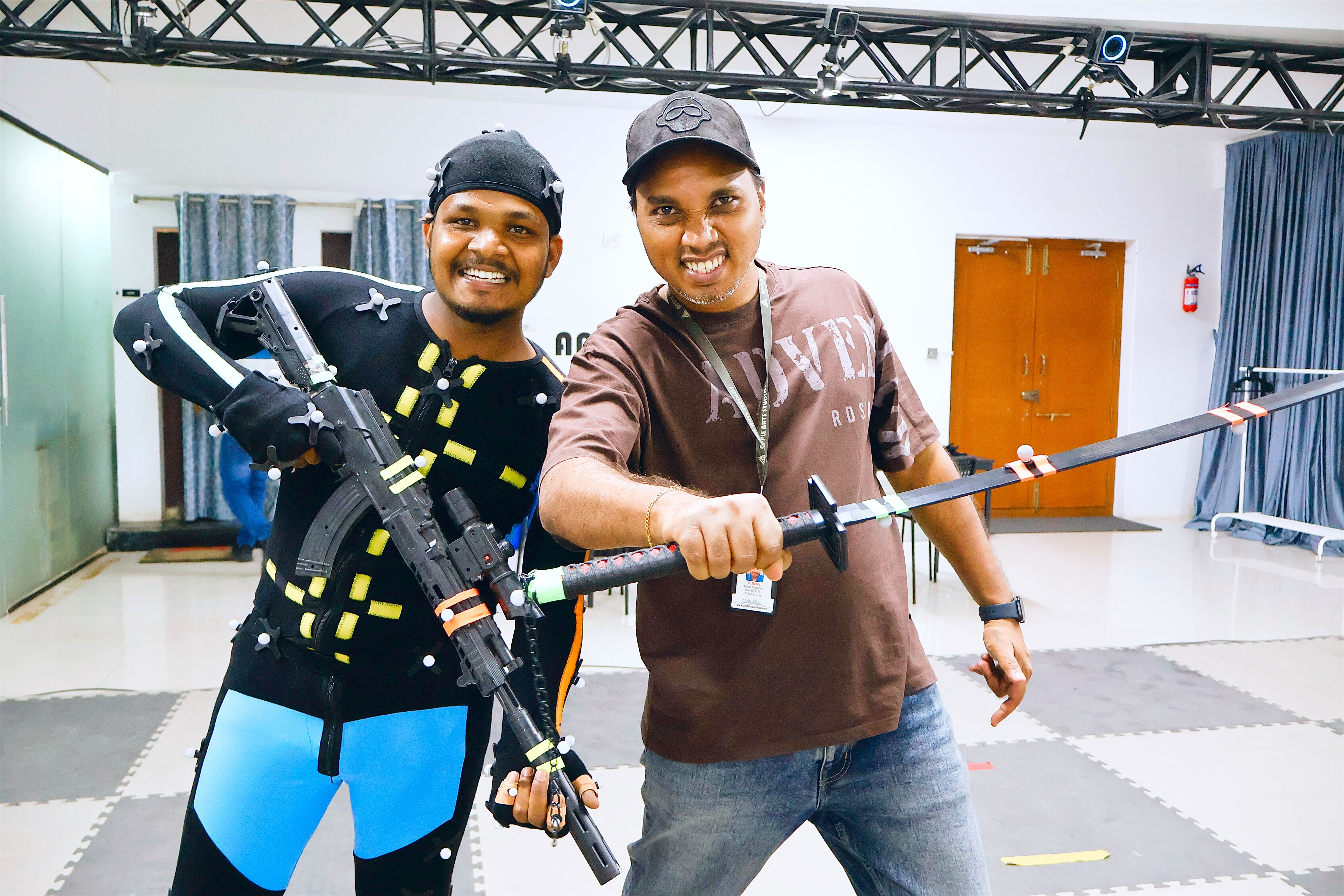
Why Camera Accuracy Is Important in Motion Capture
Modern motion capture is no longer limited to recording body movement. A complete motion capture studio must also manage virtual cameras, real-time previsualization, post camera tracking, and final scene integration.
Even a very small difference between the camera seen on set and the camera used in the final output can create major problems. A character may no longer line up with the environment. VFX elements may appear to drift. A shot that looked correct during capture may suddenly feel wrong in the final sequence.
This becomes especially important in motion capture for films, motion capture for gaming, virtual production, and cinematic animation, where accuracy is critical.
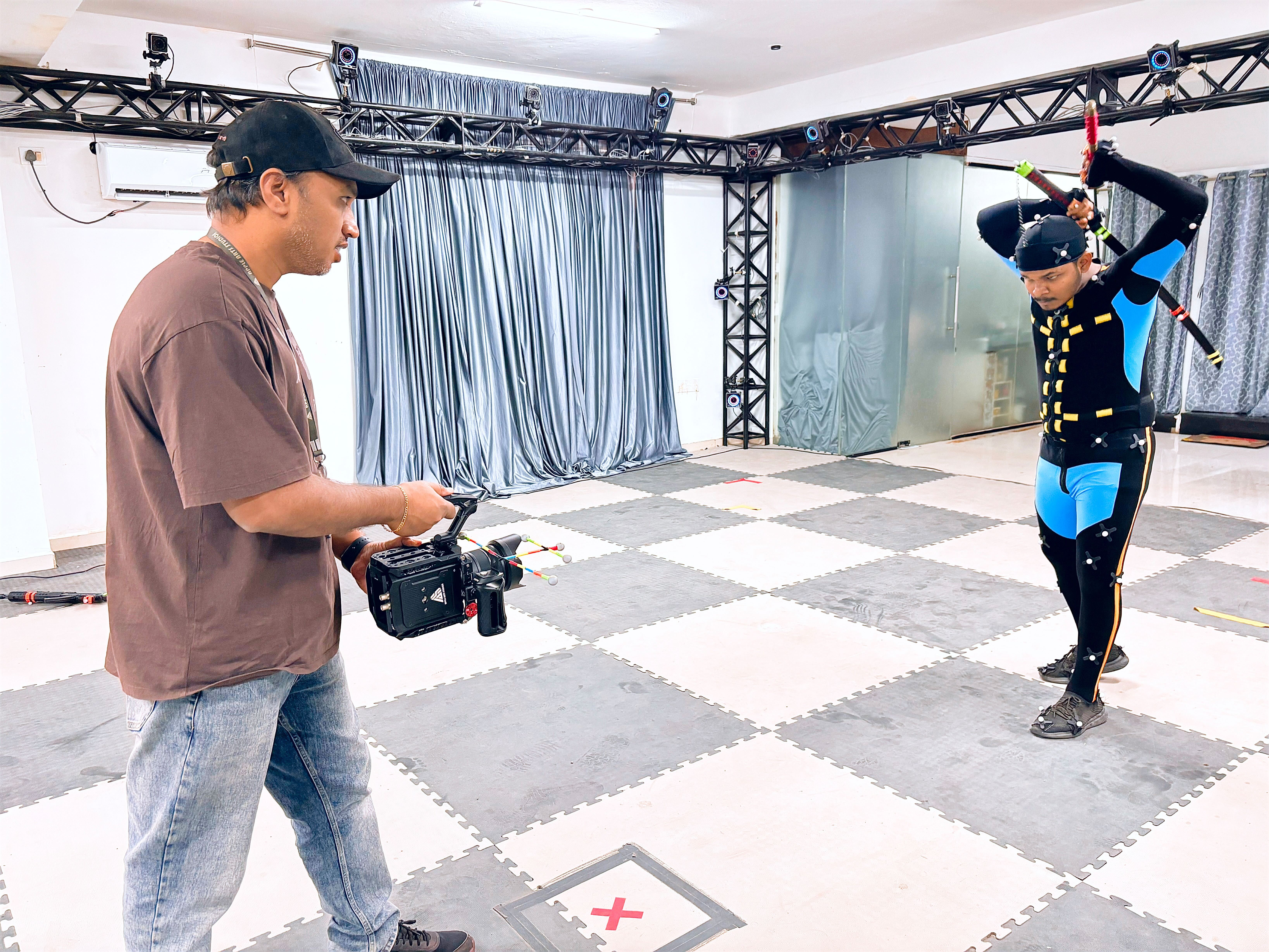
The Focus of Our R&D Session
This R&D session at Apple Arts Studios was designed around one specific challenge:
Keeping the camera perfectly locked between real-time previsualization and the final post-processed output.
To solve this, our team tested:
· camera alignment during live capture
· stability of camera tracking data
· matching the virtual camera to the final camera in post
· preventing drift between preview and output
· maintaining consistent framing across the entire workflow
The goal was simple: what the director sees during capture should be exactly what appears in the final shot.
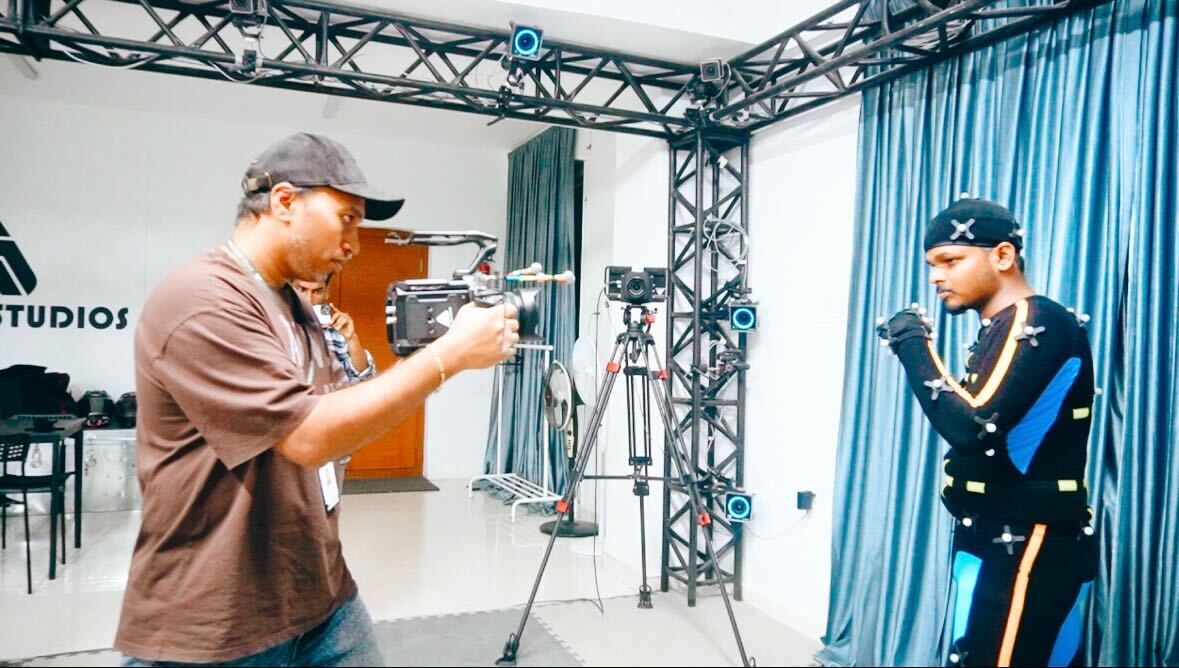
Removing Guesswork From Production
Many delays in a motion capture project happen because teams are forced to fix problems after the shoot. When camera data does not match, artists spend extra time correcting shots, rebuilding scenes, or adjusting VFX work.
By testing everything in advance, we remove that uncertainty.
Our R&D process allows production teams to work with confidence because the camera system has already been validated before the project begins. This is especially valuable for:
· motion capture for VFX
· motion capture for animation
· motion capture for game development
· projects with complex virtual camera movement
· scenes that require precise camera tracking
Instead of reacting to problems during production, we solve them before they happen.
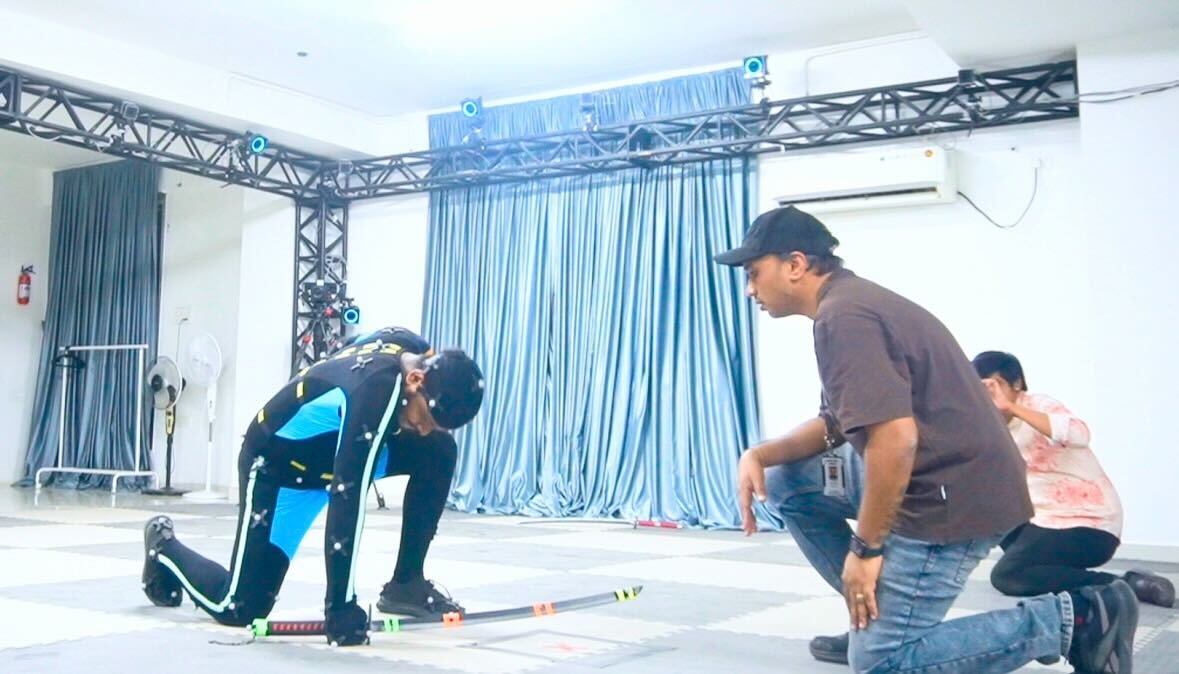
Built on Real Production Experience
Since 2011, Apple Arts Studios has continued to develop production-ready motion capture workflows designed for reliability and accuracy.
Our motion capture studio in India operates with a 127 camera motion capture system and supports complete performance capture, including body tracking, facial tracking, and finger capture.
The studio is built around a full performance capture pipeline that combines real-time motion capture, post-processing, and final data delivery.
We use Vicon motion capture systems inside the studio and continue to refine every stage of the workflow through ongoing research and testing.
Because of this approach, our motion capture services are not only focused on recording performance. They are focused on delivering dependable data that can move directly into film, VFX, and game production.
A Better Way to Approach Motion Capture
At Apple Arts Studios, motion capture is treated as a controlled process, not just a recording session.
Every R&D test is created to answer a real production problem before it affects a project. By validating camera accuracy between previsualization and final output, we make sure that the production team can trust what they see from the very beginning.
In motion capture, preparation is what creates a smooth production and a stronger final result.
About the author
- Passionate about motion capture and digital storytelling. I write about studio experiments, motion capture shoots, MetaHuman characters, and real-time pipelines using Unreal Engine. This space is where I document our journey building advanced mocap productions at Apple Arts Studios.
Comments
Join the discussionNo comments yet. Be the first to comment.
